
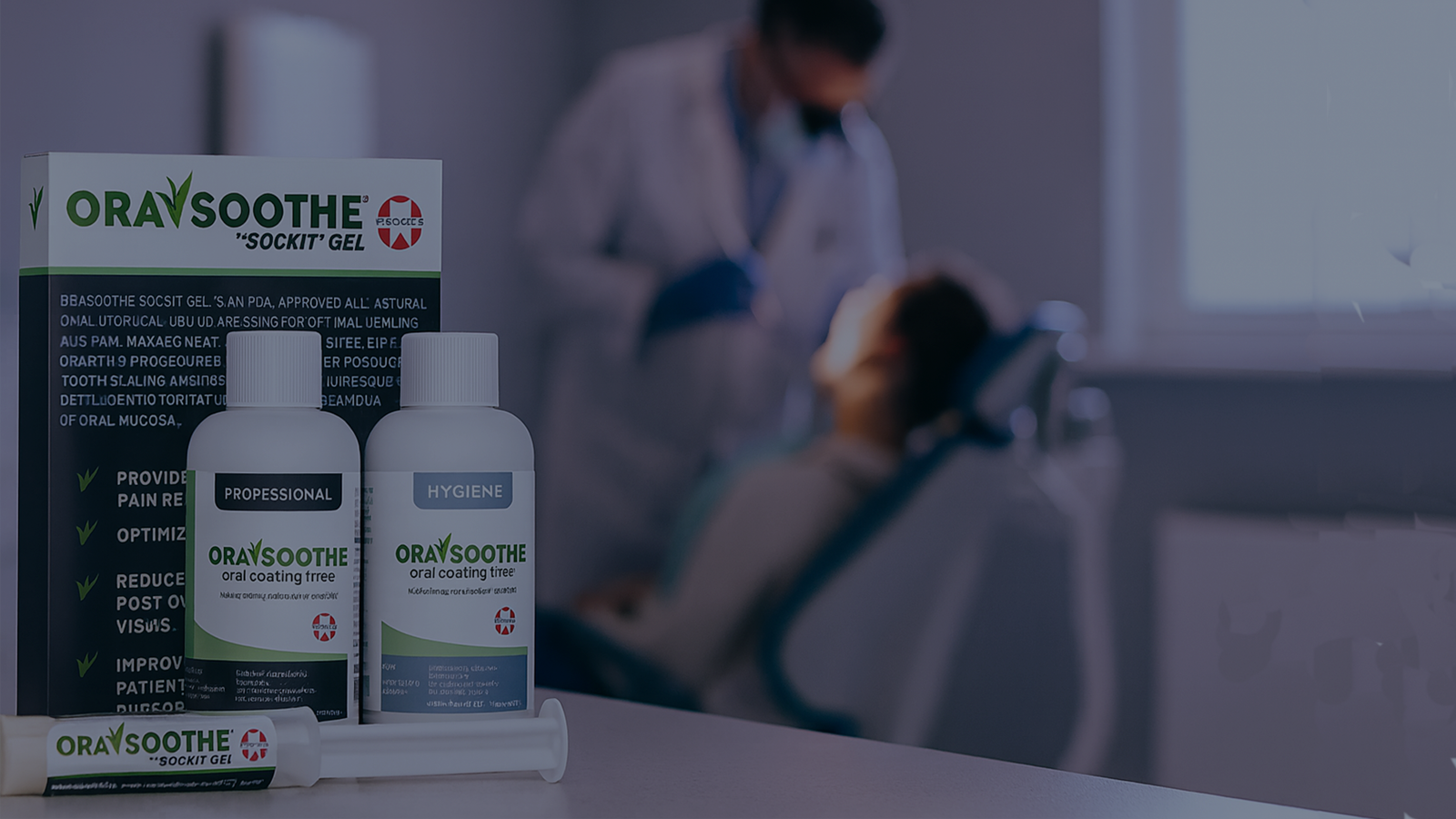
Image of OraSoothe Sock-it and OraSoo rinses in a dental office
After an extraction, implant, graft, or other oral procedure, patients leave the practice with a healing site that can be exposed to friction from speaking, chewing, and everyday oral movement. A hydrogel wound dressing can add a practical layer of care by coating the area and supporting comfort and protection as part of the post-procedure routine.
For dental teams, it offers a way to make aftercare more tangible: explain what the product does, show patients how it fits into their instructions, and provide a drug-free option when appropriate. Here’s what an oral hydrogel wound dressing is, and how to consider it in practice.
What Is an Oral Hydrogel Wound Dressing?
A hydrogel is a water-rich material formed by a network of polymers. In wound care, some hydrogels are designed to sit on tissue as a soft, moist covering. Oral formulations are made for the mouth’s distinctive environment, where saliva, talking, chewing, and swallowing can affect how a product stays in place.
Hydrogels vary. Some are designed as patches or films; others are gels applied directly to a site. Some formulations carry active ingredients, while others are drug-free. The term oral wound dressing describes a product’s role in protecting an oral wound, not a single, standardized formula or a guarantee that all products work in the same way.
An oral hydrogel dressing may form a temporary coating over the area. Depending on its formulation and directions for use, that coating can help limit direct irritation and support a moist environment as the tissue heals. It does not replace the body’s healing process, clinical judgment, or routine post-operative instructions.
How Does an Oral Hydrogel Work?
The practical idea is straightforward: apply a soft gel to the area so it can coat the tissue. An oral product may adhere to moist surfaces, helping it stay in contact with the site for a period of time. This can provide a protective layer against everyday contact.
That function differs from numbing the mouth or delivering prescription medicine. OraSoothe SockIt Gel is an FDA-cleared, all-natural, drug-free oral hydrogel wound dressing intended to support comfort and protection as part of an aftercare routine, when used as directed by dental professionals.
A dressing is an adjunct, not a substitute for care. It does not replace sutures, pressure, prescribed medication, or follow-up when those are clinically indicated. Use product directions and the patient’s procedure-specific instructions as guidance.
Where Can It Fit in Dental Aftercare?
An oral hydrogel dressing may be considered in care plans involving procedures or conditions that leave oral tissue needing protection. The product’s indications, labeling, and clinician’s judgment should guide each use.
Extractions: After the procedure, a dental professional can explain how a dressing fits alongside instructions for protecting the site and caring for the mouth. For more on patient recovery, see our post-extraction care guide.
Implants: The surgical area benefits from clear, coordinated aftercare. If a hydrogel is appropriate, include it as one part of the practice’s instructions, not as a replacement for the implant team’s protocol.
Grafting procedures: Graft sites have specific care requirements. The clinician should decide whether an oral wound dressing is suitable and how it should be used with the rest of the treatment plan.
Laser procedures: Laser treatment can create areas of oral tissue that need aftercare. A product intended for oral wounds may be considered to support comfort and protect the site, according to its directions.
Mouth sores and other oral mucosal wounds: These concerns have different causes and may need different clinical assessment. A dressing should be used only when appropriate for the patient and the product’s intended use.
What Does the Research Say?
Research on hydrogels in oral care includes different materials, products, and applications. A review in Biomaterials Science describes their potential uses and the challenges of designing materials for the oral environment. Individual clinical studies have examined specific products for concerns such as oral mucositis and denture-related ulcers. Those findings do not establish that every hydrogel has the same effects or that results for one formulation apply to another.
The evidence base also has limitations. A systematic review of chitosan-based treatments for oral mucosal inflammation found a small number of clinical trials and noted concerns about study quality. Chitosan products are not interchangeable with all oral hydrogels, but the review reinforces an important point: evaluate evidence product by product and indication by indication.
For background, see the review on hydrogels for oral and maxillofacial diseases, a randomized trial of a mucoadhesive hydrogel rinse, and a systematic review of chitosan for oral mucosal inflammation. These sources cover different formulations and uses; they should not be read as proof of outcomes for every product.
How to Evaluate a Hydrogel for Your Practice
Before adding an oral hydrogel wound dressing to a workflow, review the details that matter in daily care:
Intended use and directions: Check the product labeling and confirm that the patient’s procedure or wound is appropriate for use.
Application: Consider how the product is applied, who applies it, and what instructions patients will need at home.
Patient suitability: Review relevant allergies, sensitivities, and individual clinical factors. Explain when a patient should contact the practice.
Relationship to existing care: Make clear that the dressing complements, not replaces, the post-operative plan and any other clinically indicated treatment.
Evidence and claims: Use product-specific information. Avoid assuming that results from a different hydrogel or oral condition apply to the product you use.
Making Aftercare Clear for Patients
A product is most useful when patients understand its role. Briefly explain why it is included, demonstrate application when appropriate, and provide written directions consistent with the product labeling. Reinforce the rest of the aftercare plan, including any restrictions or follow-up instructions.
OraSoothe SockIt Gel offers practices an FDA-cleared, all-natural, drug-free oral hydrogel wound dressing for use as directed by dental professionals. Its role is to support comfort and protection within an aftercare routine, not to treat or cure a condition or replace professional care.
For product information, visit the OraSoothe products page or browse the practice resources.
